Fortinet Inc (FTNT): Growth-Dependent Halal Profile with Constrained Downside Buffers.
A Risk-Aware Review of Growth Exposure and Downside Protection With Restricted Capacity for Downside Absorption.
Published June 16, 2026 | purepofo Research | 7 min read
Fortinet Inc’s return profile is largely dependent on fundamental normalization, while limited downside resilience increases downside exposure, with conviction contingent on clearer convergence across the core signals. Fortinet Inc currently qualifies as compliant under prevailing Shariah screening methodologies with forward-looking compliance metrics indicating stability. Growth dynamics currently read as structurally elevated growth execution, while the maturity layer remains early-stage structural stabilization, indicating a transitional lifecycle profile in which the business mix has not yet resolved into a clean archetype. Structural downside mitigation appears insufficient, driven by weakness in balance sheet strength, and valuation signals indicate strong convergence across valuation methodologies, reinforcing the importance of scenario-aware interpretation. The profile supports growth-oriented allocation with improving stabilizing characteristics.
Company Overview
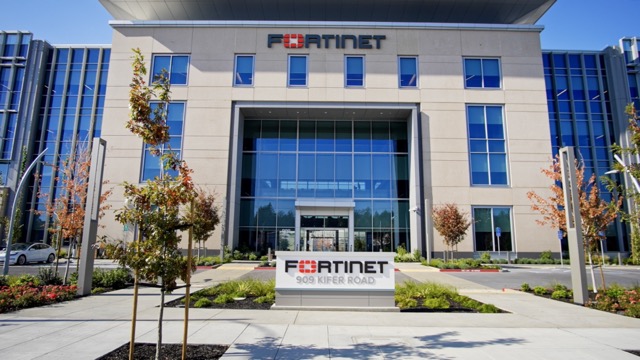
Fortinet (Nasdaq: FTNT) is an American multinational corporation headquartered in Sunnyvale, California. It develops and sells cybersecurity solutions, including but not limited to physical products such as firewalls, plus software and services such as anti-virus protection, intrusion prevention systems and endpoint security components. Operating conditions remain influenced by regulatory dependency, reflecting reliance on adherence to global cybersecurity standards and regulations.
As of the latest reporting period, Fortinet Inc (FTNT) maintains a market capitalization of 107.8B USD, reflecting its positioning along a growth-oriented trajectory. Earnings and cash flow patterns indicate expanding operational scale and reinvestment capacity, consistent with a growth-oriented capital allocation posture, with operations centered on product dependency (reliance on firewall and security software for primary revenue and customer retention).
Halal (Shariah) Compliance
Fortinet Inc is currently assessed as Halal-compliant under formal Shariah screening. The assessment is grounded in AAOIFI business activity and financial ratio screening. FTNT operates in a Halal-compliant industry. The interest income ratio stands at 2.39%, within the acceptable limit of 5%, providing adequate compliance headroom. The interest-bearing debts ratio amounts to 1.68%, significantly below the acceptable limit of 30%. The liquid assets ratio is recorded at 7.05%, within the acceptable limit of 30%, maintaining a sound compliance buffer.
Beyond historical compliance status, the article incorporates a forward-looking Halal compliance signal generated through a machine-learning model tested across multiple market regimes. Within this context, Fortinet Inc shows that forward compliance probability remains high, while historical ratio screening indicates a consistently Halal compliant pattern.
Halal compliance assessments reflect available data at the time of writing and are subject to revision as financial structures or business activities change.
Ethical Preference (ESG & Values-Based Overlays)
In addition to Shariah compliance screening, certain investors incorporate broader ethical or ESG-based preferences into their decision-making. The considerations discussed here for Fortinet Inc are discretionary in nature and do not form part of formal jurisprudential compliance assessments.
FTNT's ESG performance is mixed relative to peers, with strengths and weaknesses across rating frameworks. purepofo’s ESG screening integrates publicly disclosed ESG ratings from established providers alongside structured controversy monitoring across environmental, social, and governance dimensions. Beyond formal Shariah and ESG screening, Fortinet Inc exhibits potential exposure to ESG controversy exposure, which may influence mandate eligibility for ethically constrained investors, reflecting limited public controversies related to environmental or social issues.
Business Positioning
Growth conditions for Fortinet Inc remain favorable, supported by a consistent set of expansion-oriented indicators. Income levels have remained broadly stable, without pronounced acceleration or contraction. Market expansion remains relatively stable, indicating consistent positioning within the competitive landscape. Valuation momentum is supported by strengthening earnings expectations, reinforcing positive market re-rating dynamics.
The company exhibits moderate maturity, supported by certain stabilizing elements but not yet uniformly across the profile. Profit stability shows gradual improvement, with slightly improving trend and a stabilizing margin profile (stability ratio ≈ 0.81). Cash flows demonstrate structural stability, supported by a strong consistency profile (stability ratio ≈ 0.99) and slightly improving trend, reinforcing earnings reliability and downside protection. Valuation maturity appears relatively stretched, with a low maturity profile (maturity score ≈ 1.46 /4.0).
Resilience characteristics remain uneven, suggesting limited protection under prolonged or severe stress conditions. Balance Sheet Strength represents a key source signs of pressure, reflecting limited balance-sheet flexibility. Cash Cycle Strength also indicates extended, tying up capital in operations (median cycle ≈ 109 days).
The company exhibits a compound positioning, where growth opportunities are supported by an emerging foundation of durability. Taken together, growth signals point to a durable expansion profile with meaningful upside potential. The maturity profile supports baseline stability but offers limited protection in more adverse environments. Structural downside protection appears insufficiently developed. While competitive positioning is intact, execution outcomes remain influenced by regulatory dependency, reflecting reliance on adherence to global cybersecurity standards and regulations.
Investment Prospects
Fortinet Inc demonstrates notable investment strengths. FTNT's income growth is assessed as strong, based on its annual net incomes. From a performance perspective, FTNT's profit stability appears strong. FTNT's interest coverage is assessed as strong, supported by consistent structural resilience in annual interest coverage ratios. These highlights reflect Fortinet Inc's top three performance indicators.
Based on no driver due to insufficient data, FTNT shows a None balance sheet strength. Overall, FTNT shows a weak cash cycle strength, underpinned by limited structural resilience in cash conversion cycle (ccc). The assessment of FTNT's liquidity position as weak is primarily driven by limited structural resilience observed in annual current ratios. These represent areas that warrant closer monitoring.
Analyst expectations exhibit relatively tight analyst alignment for the upcoming fiscal period. Fortinet Inc’s revenue outlook for the next fiscal year ranges between 8.3B USD and 9.0B USD, with a consensus estimate near 8.6B USD, based on multiple analyst forecasts. Earnings projections imply an expected EPS range from 2.99 to 3.93 USD, with a mean forecast of approximately 3.43 USD.
From a return–risk perspective, Fortinet Inc exhibits a trailing three-year compounded ROI of 114.4%, anchoring its medium-term performance profile. Over the most recent year, returns reached 44.6%, reflecting ongoing market dynamics. Returns appear anchored in a deeper cumulative track record rather than in a fresh short-term surge, which is often more consistent with durable compounding. Cumulative returns over 15 years provide long-term performance context. Risk-adjusted performance is reflected in a Sharpe ratio of 0.94.
From a multi-model valuation perspective, Fortinet Inc exhibits valuation that indicates downside risk across most methodologies, relative to a current market price of 147.14 USD. Under a conservative discounted cash flow framework, intrinsic value is estimated at 89.33 USD, implying potential downside of 39.3%. This outcome is highly sensitive to long-term growth and cost-of-capital assumptions. Applying a price-to-earnings growth perspective, the PEG model points to an intrinsic value of 85.65 USD, implying potential downside of 41.8%. Across methodologies, intrinsic value estimates span from 85.65 to 89.33 USD, reflecting reasonable convergence across valuation approaches. Fortinet Inc valuation outcomes are primarily driven by downside sensitivity across valuation models, highlighting the importance of interpreting implied upside or downside within an assumption-aware framework.
Summary
Taken together, Fortinet Inc maintains compliant Halal status but remains constrained by underdeveloped maturity and limited downside buffers. Consequently, return outcomes remain dependent on growth execution and valuation assumptions rather than structural defensiveness. The profile favors selective upside participation while warranting elevated risk awareness. The dominant structural constraint remains limited downside resilience.
The stock’s suitability remains mandate-dependent, requiring alignment with portfolio risk tolerance, liquidity constraints, and active oversight capacity.
Explore data-driven Halal investing frameworks